View in a room
Share
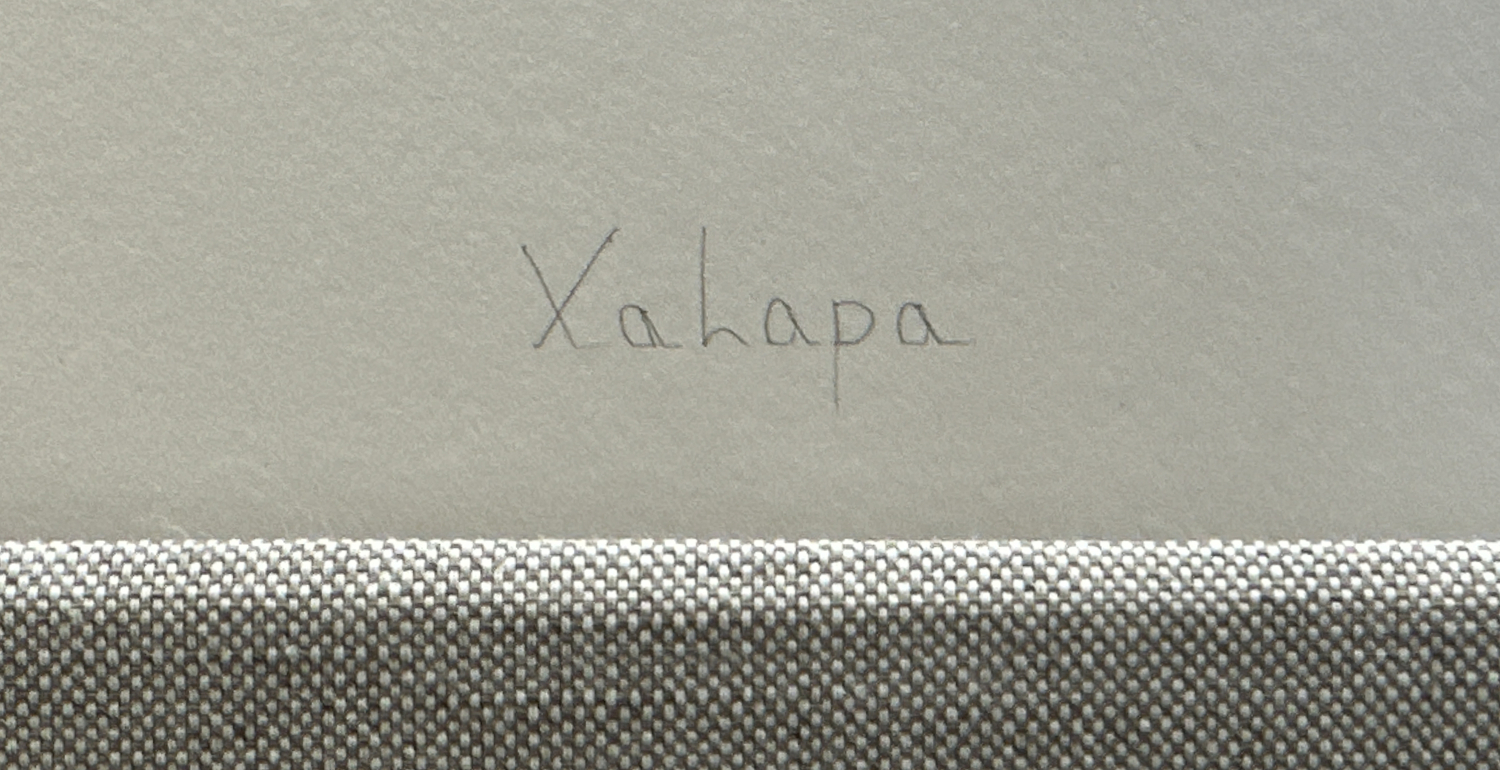
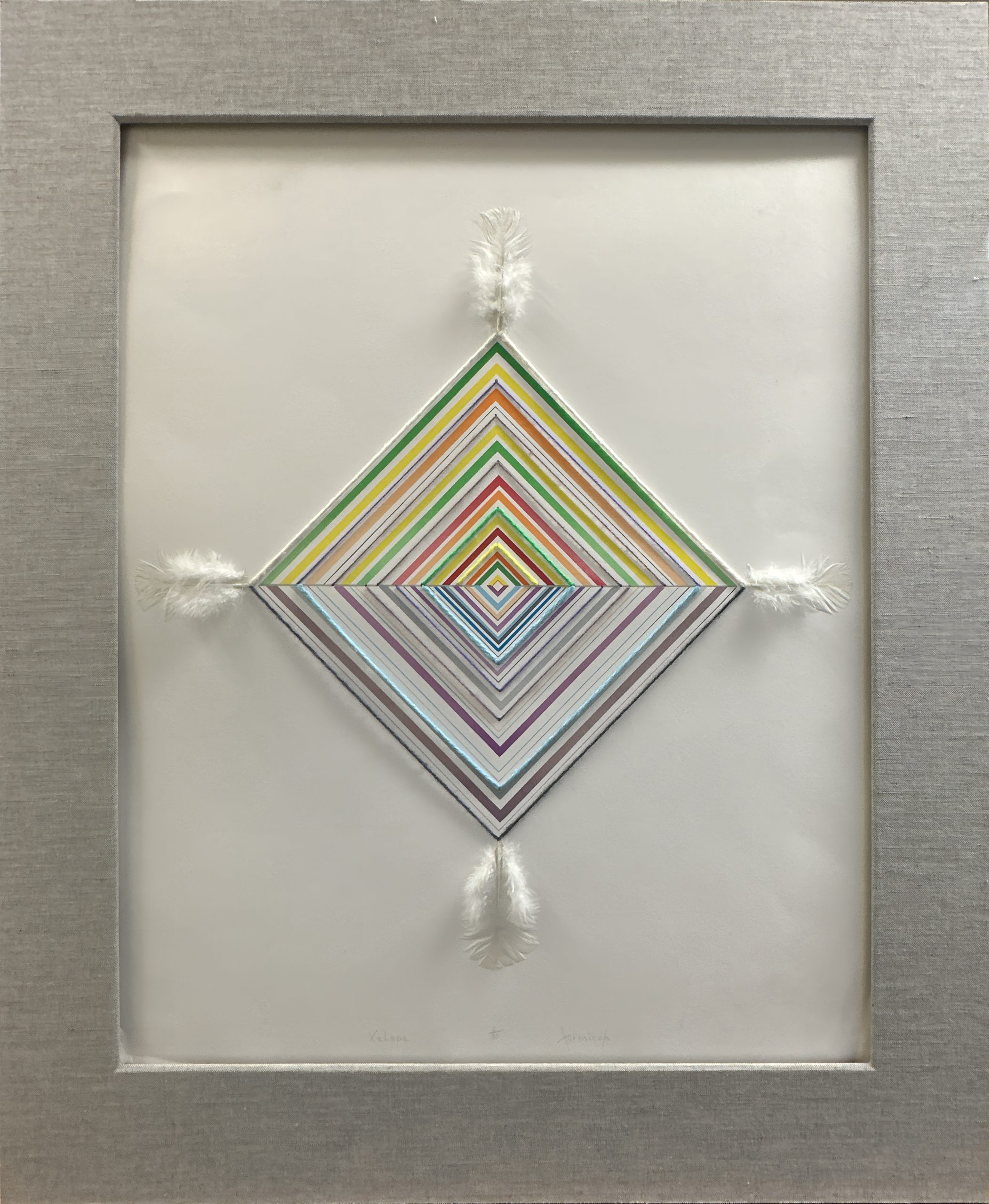
XaLapa
27 in. (h) x 23 in. (w) x 1 in. (d)
$1,500.00
Taxes and shipping fees will apply upon checkout
View in a room
Share
27 in. (h) x 23 in. (w) x 1 in. (d)
Taxes and shipping fees will apply upon checkout
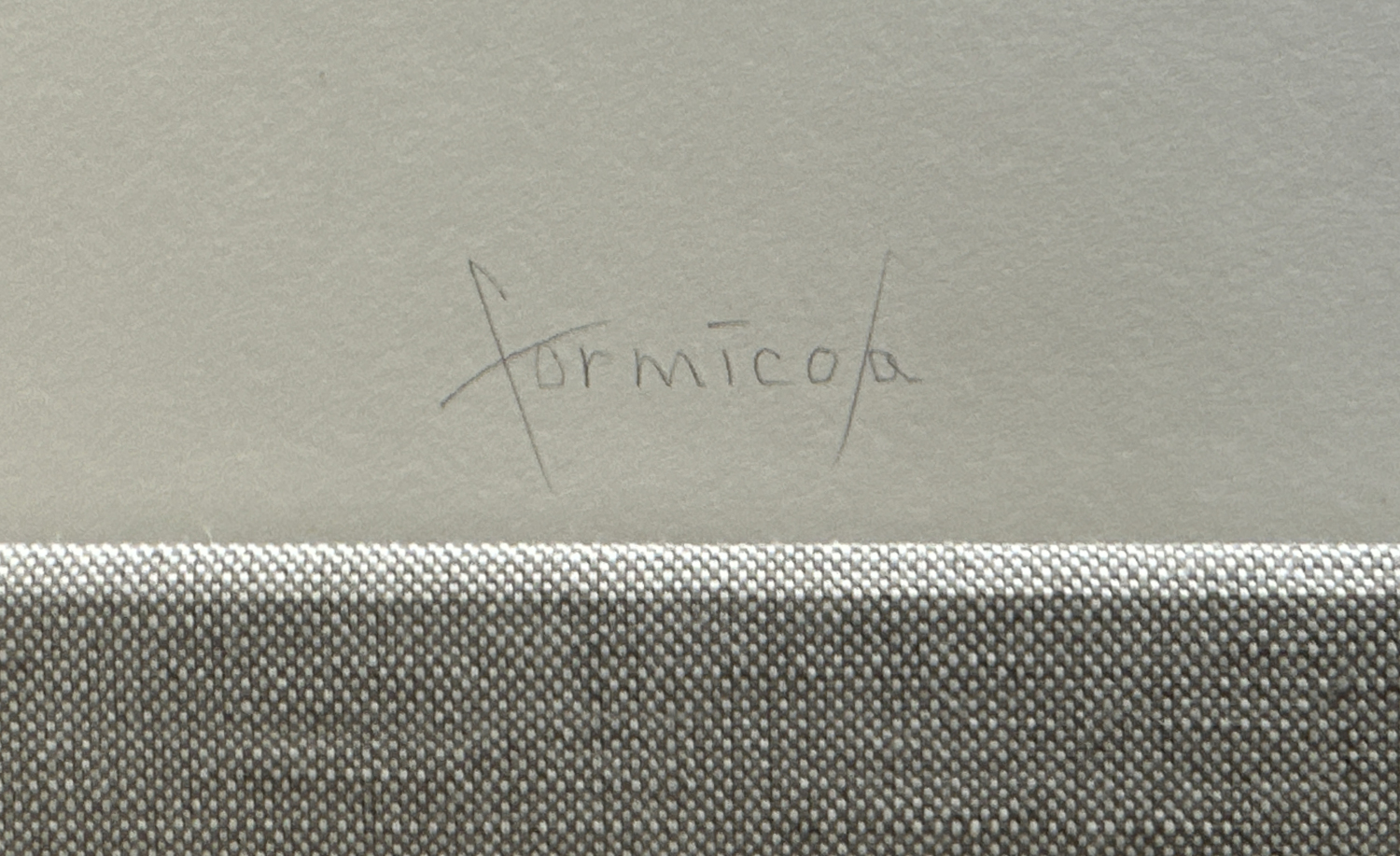
John Formicola is a Philadelphia-based painter whose work has cycled through numerous phases and modalities. He began as a figurative (and often surrealistic) painter (much of which explores men and women) but he found himself spending a decade at a time exploring different ideas.
In the late 1960s, Formicola’s focus was color and geometry. He begn teaching at Drexel University in 1968 and thought he should understand color if he was teaching it! Color quickly expanded to include geometry, which he used as a medium to explore time and space. For example, many of his rectangle-focused works were explorations of the compression of space. He explored time and space in his paintings of that time as well. For example, he created works in which he allowed the image to escape the frame by painting a frame on the canvas with the subject of the painting extending out of the frame. This depiction of breaking away led to a physical breaking away, making pictures in which the ground became irrelevant and the subject because the sole focus–so much so that he worked to eliminate entirely the ground from the work. This led to his draped fabric works, such as pieces of fabric attached one to another and his series of colored fabrics hung on long wires. But while this work was intensely focused on geometry and his interest in pulling the work out of the frames and boxes and walls that constrained it, color remained a consistent element. Thus, his fabric draped on wires, for example, were about the interaction of color across the space of the work; this color here in conversation with that color there.
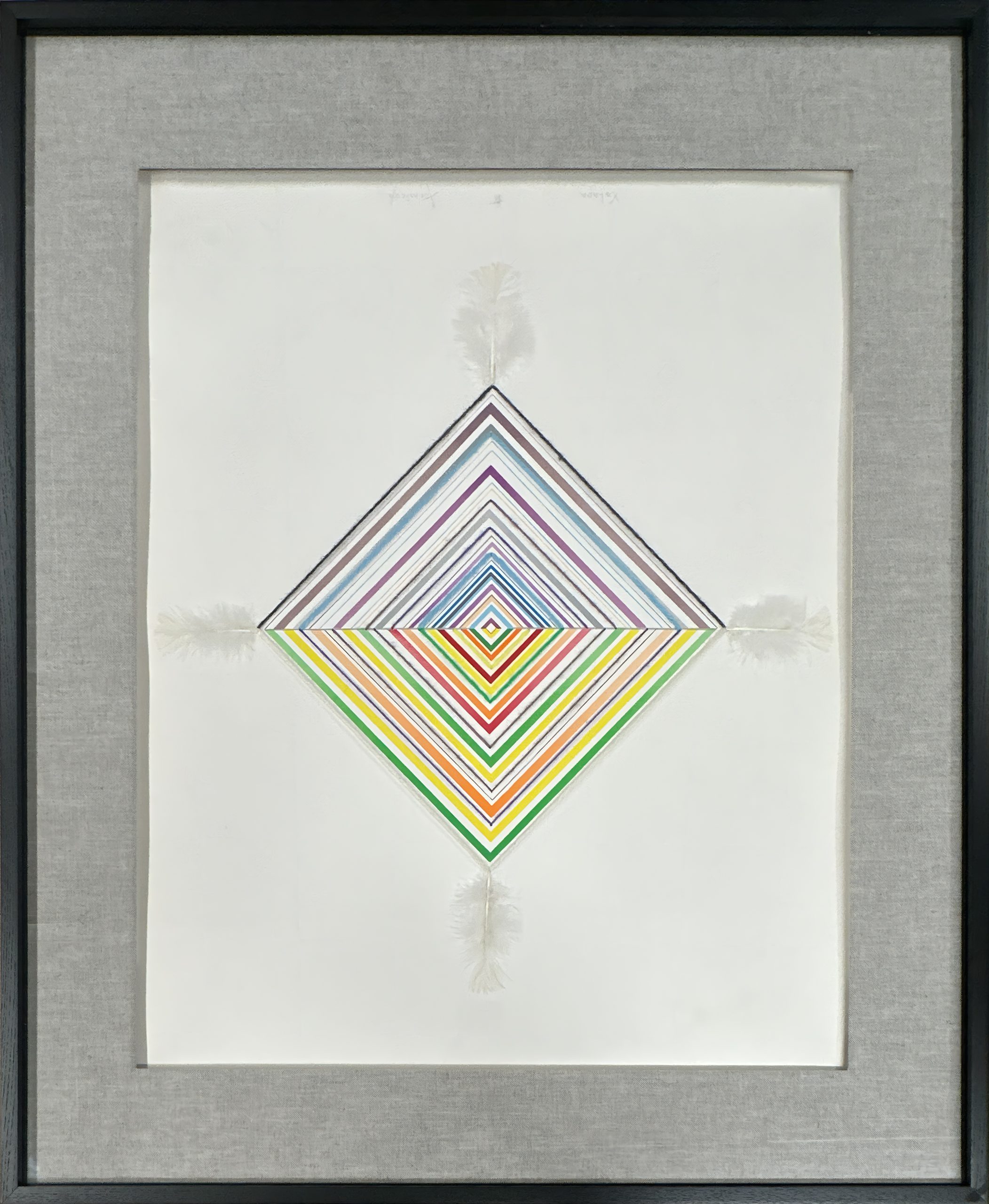
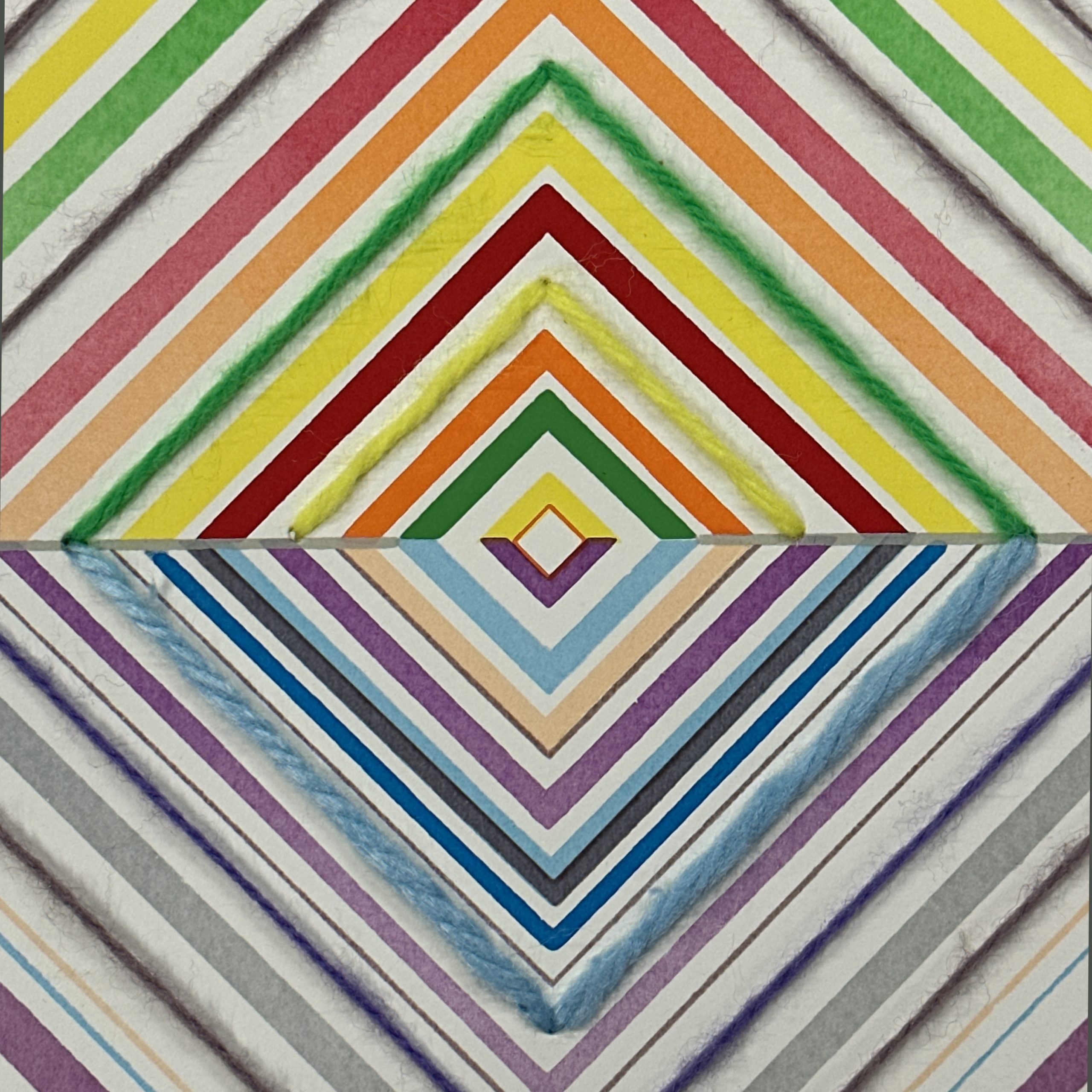
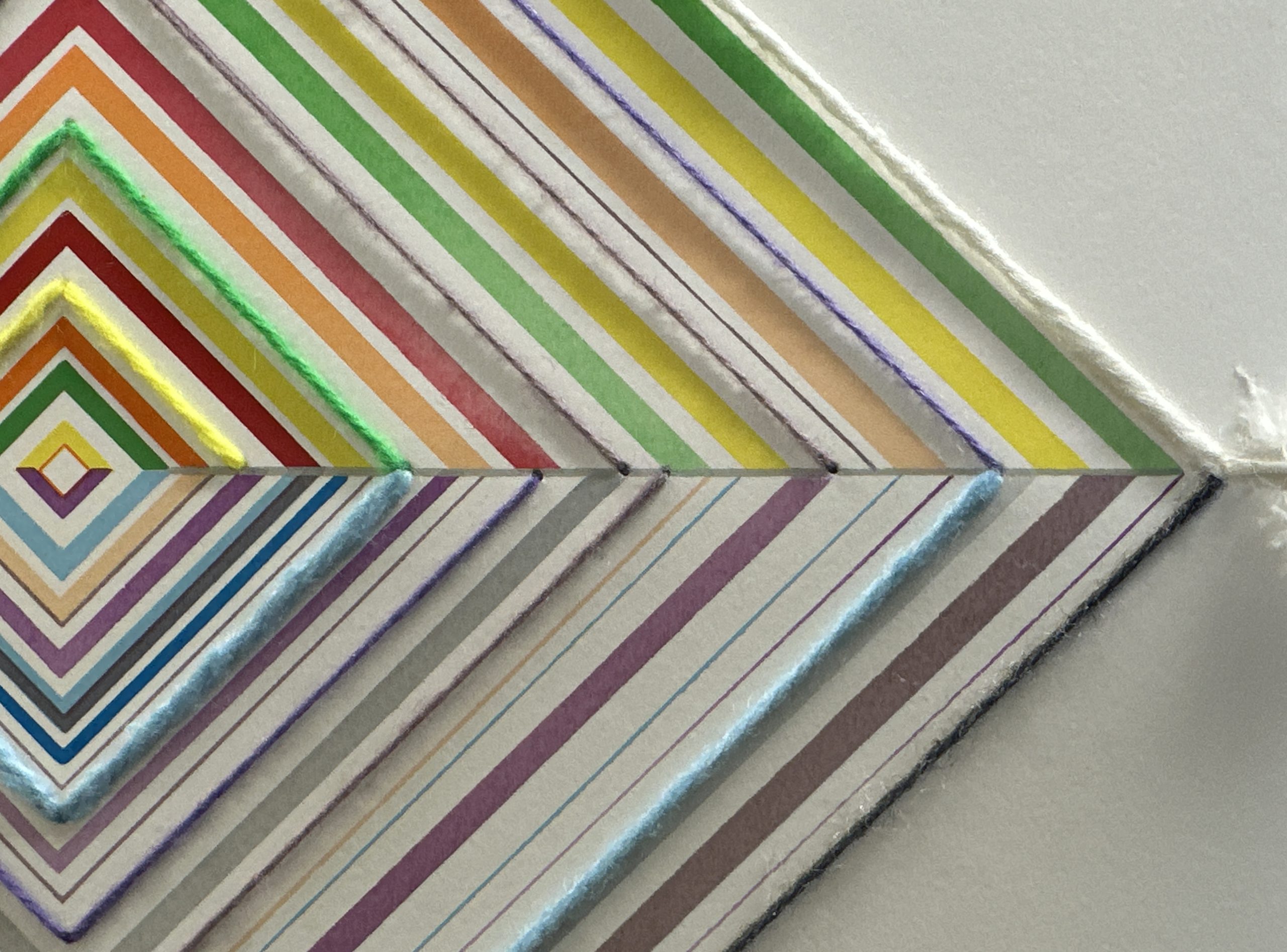
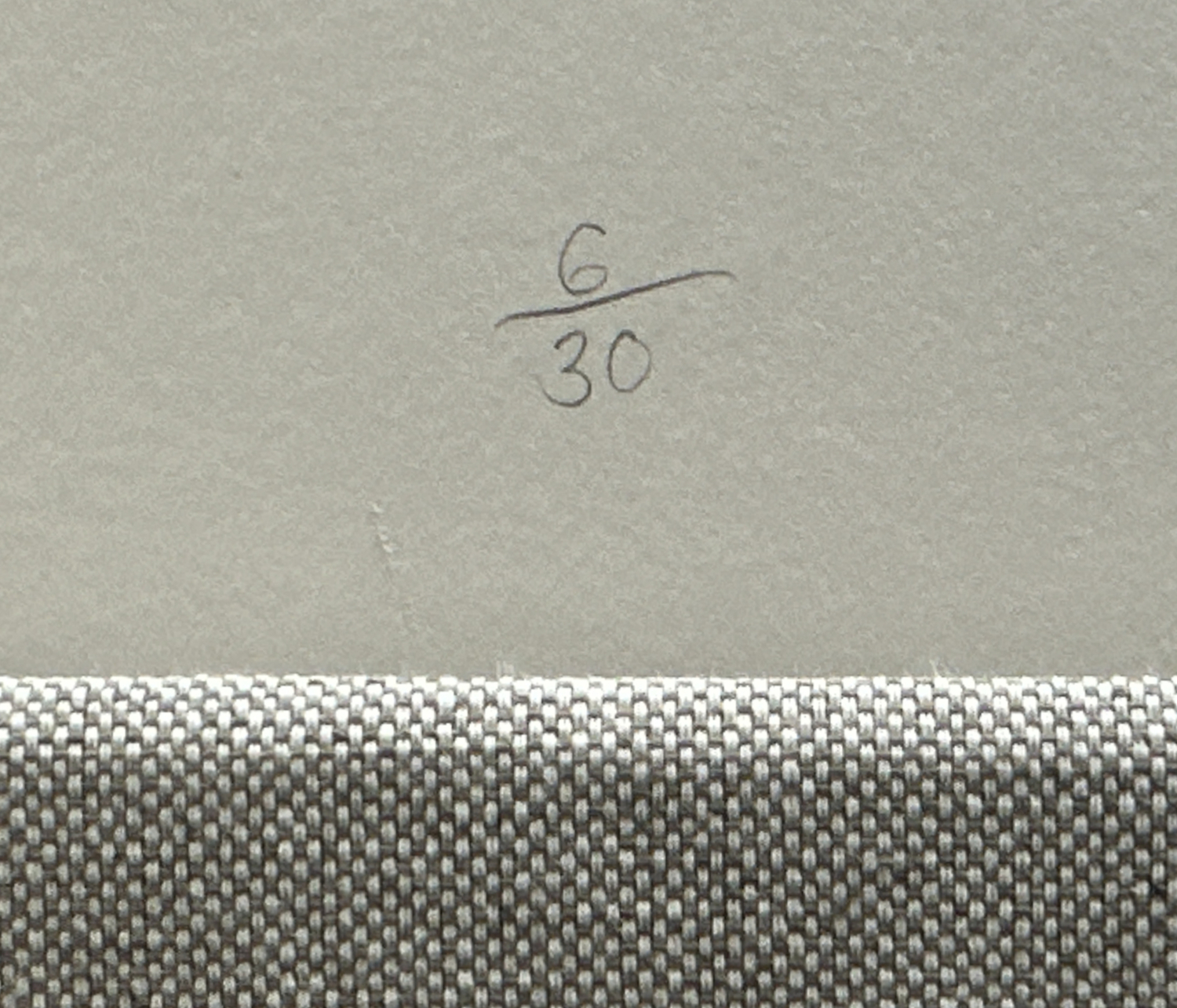
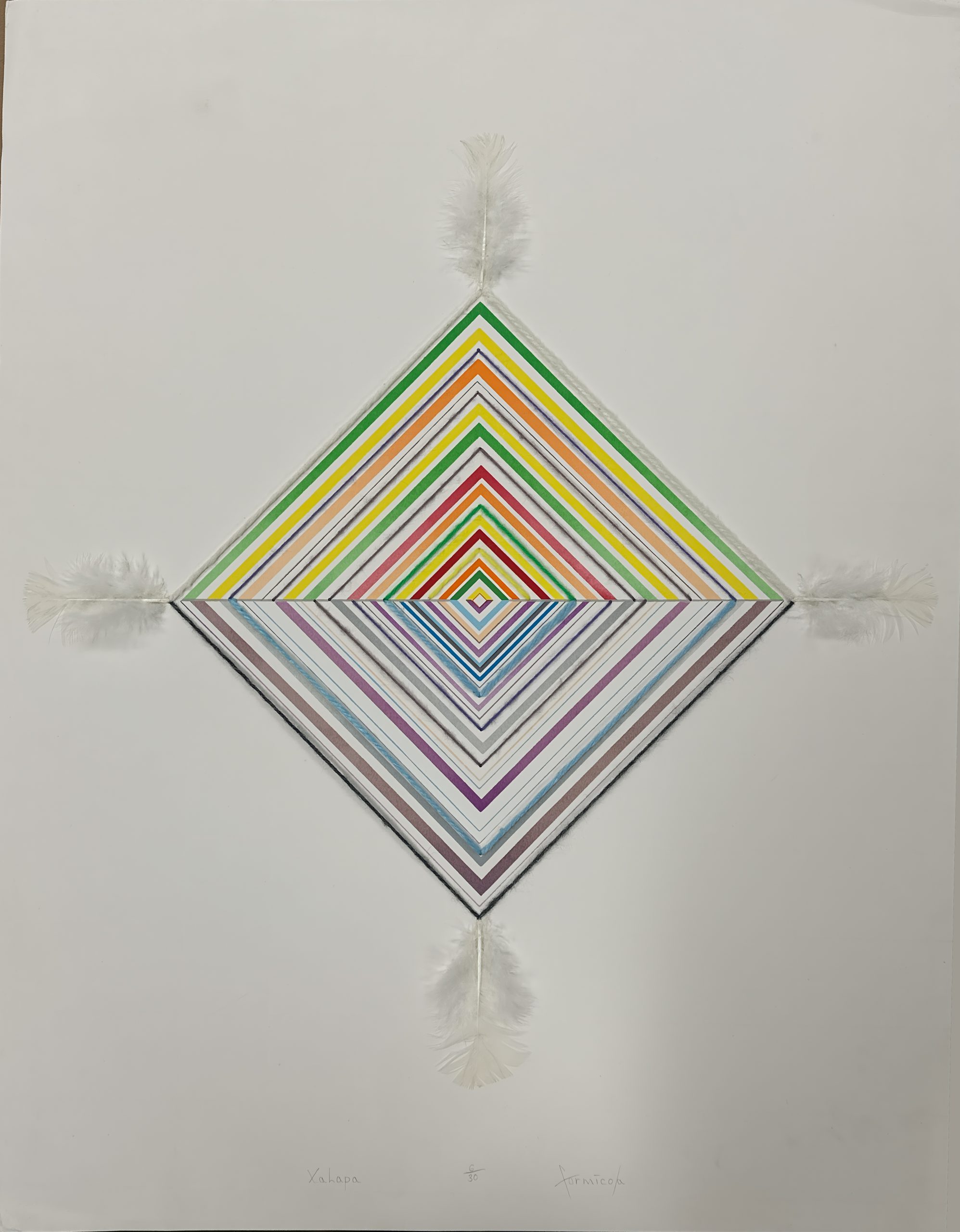
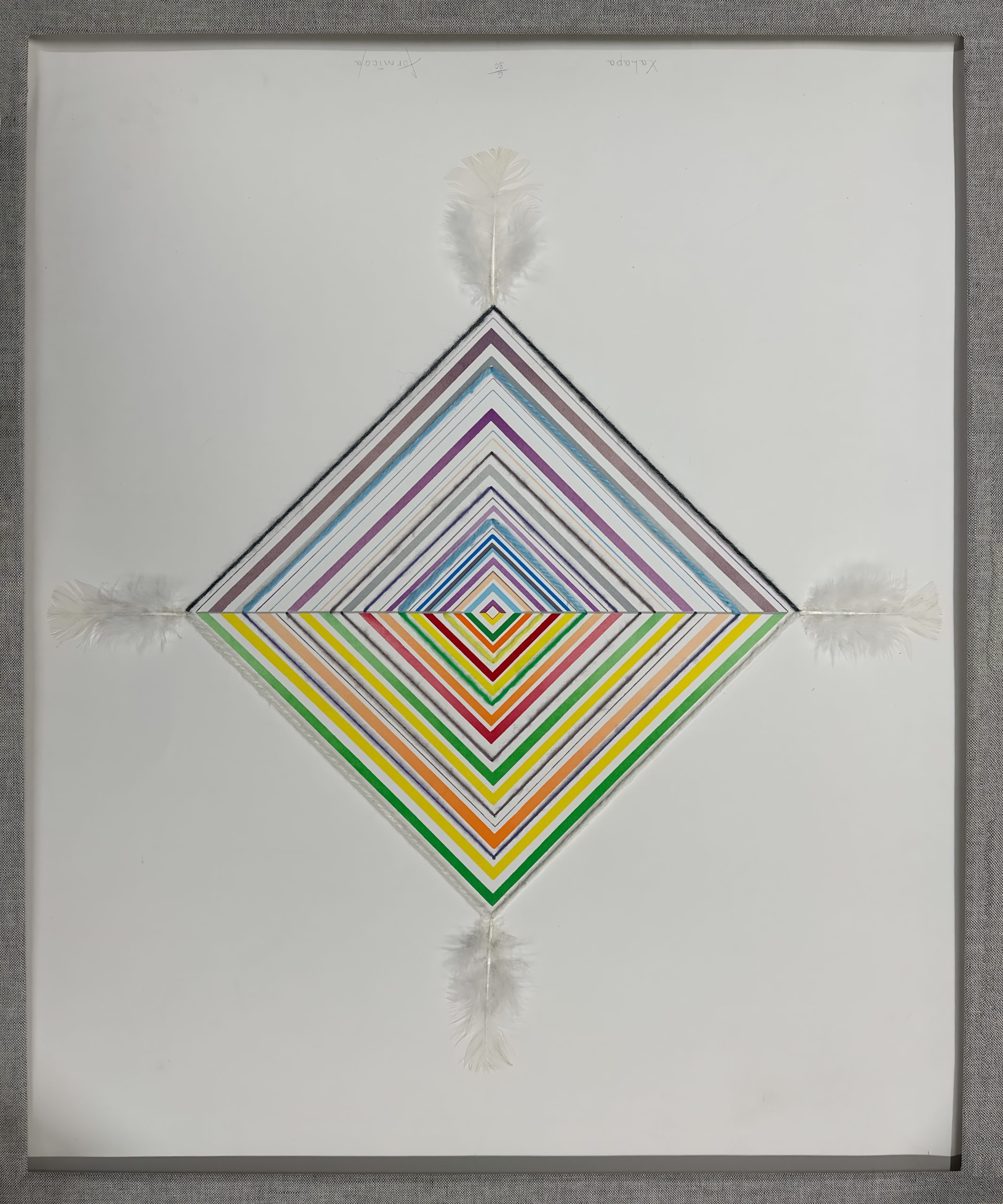
In this work, Formicola creates an interesting juxtaposition of concentric diagonally-oriented squares in which two contiguous legs of each square vary in color and line weight from the other two legs of the square. Thirty examples of the squares lithograph were produced, each adorned with yarn and feathers to make unique works.
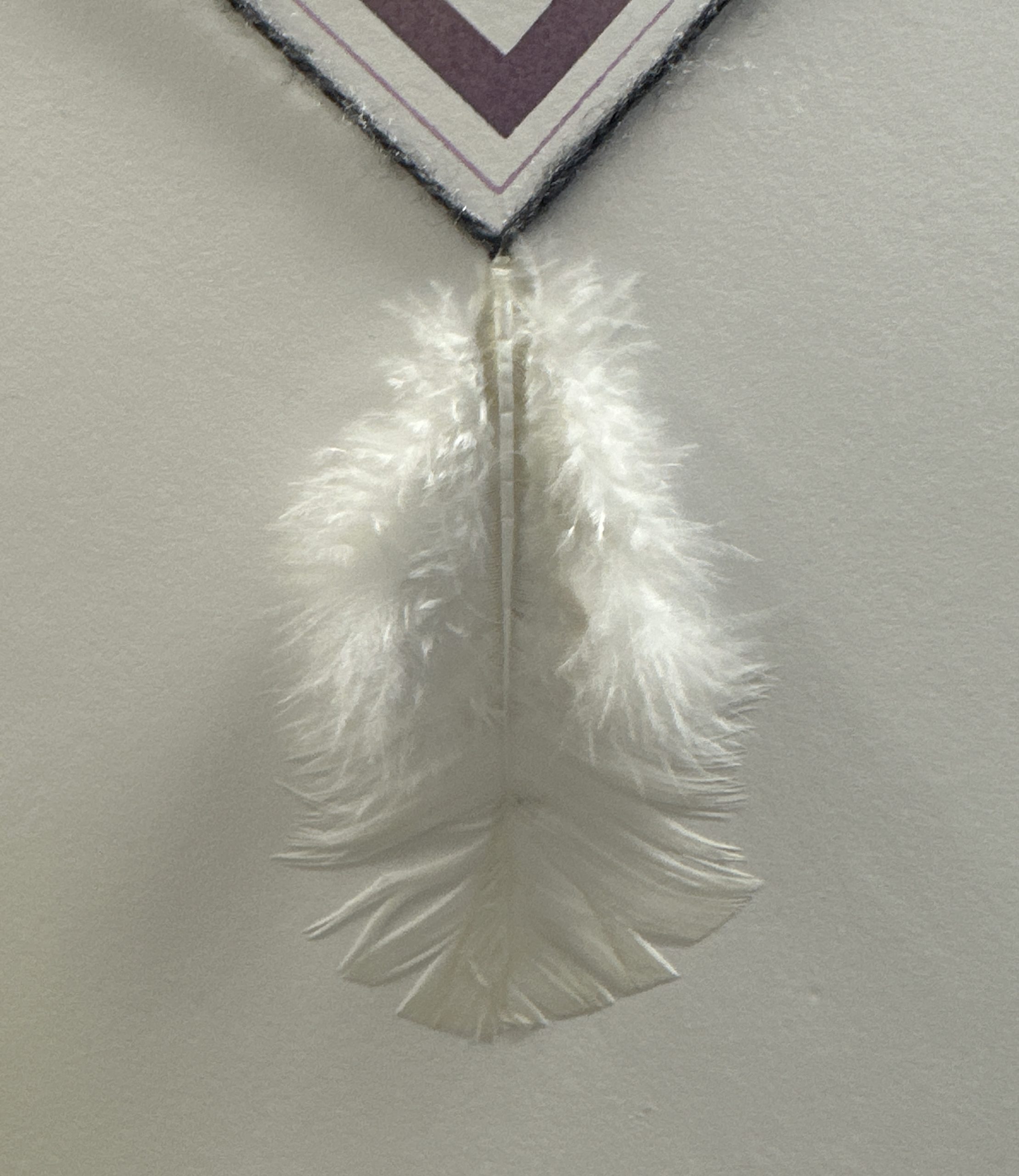
Formicola adds to the dimensions of the work by adding literal dimension–three-dimensionality by applying art and feathers to the surface of the paper–as well as variation in texture with the soft feel of the yarn and the feathers marking out the lines and corners of the squares.
The meaning of the title is not clear. Xalapa is the capital city of the state of Veracruz in Mexico. The name derives from words meaning spring in the sand; perhaps that explains the artist’s intent.
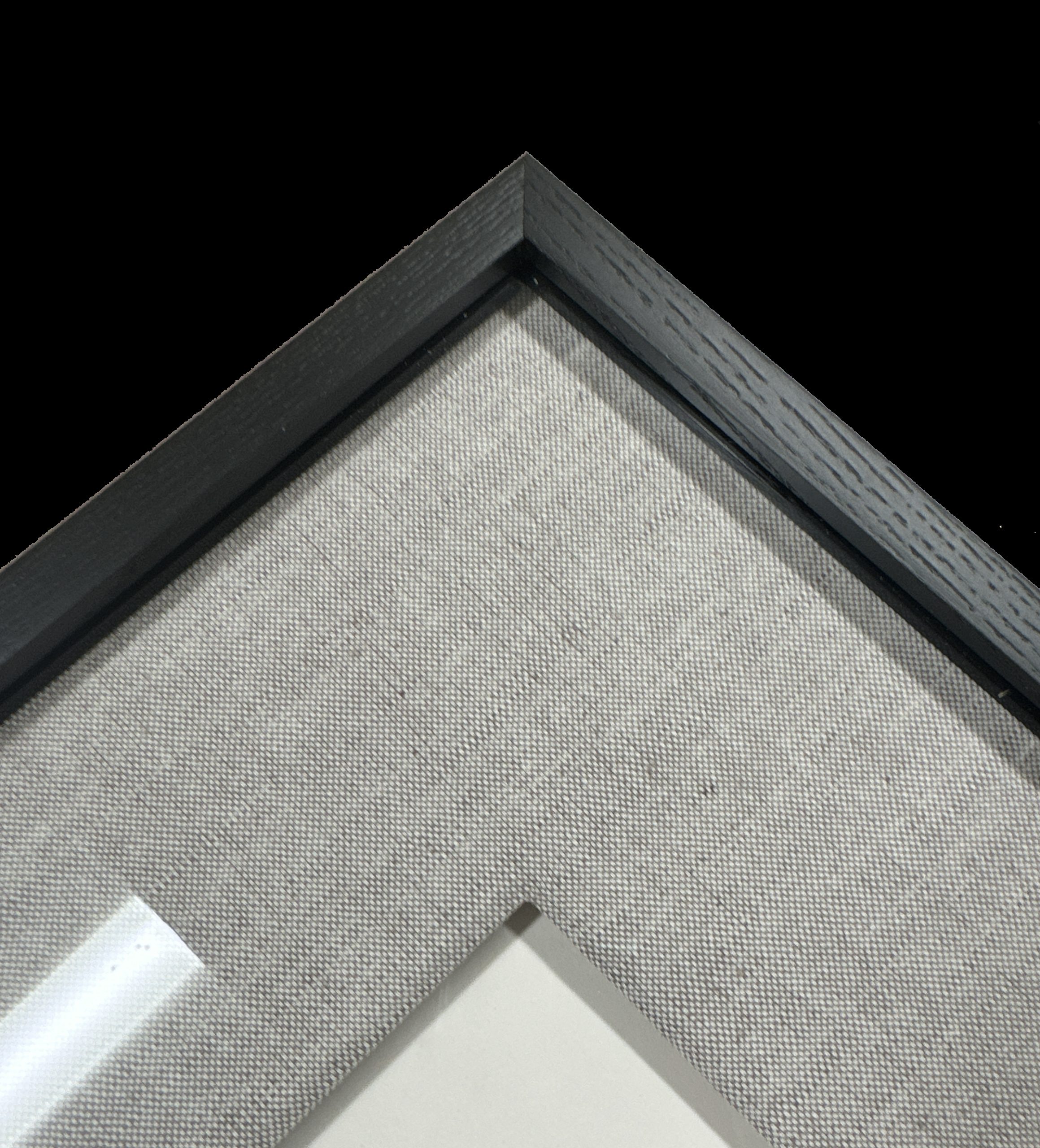
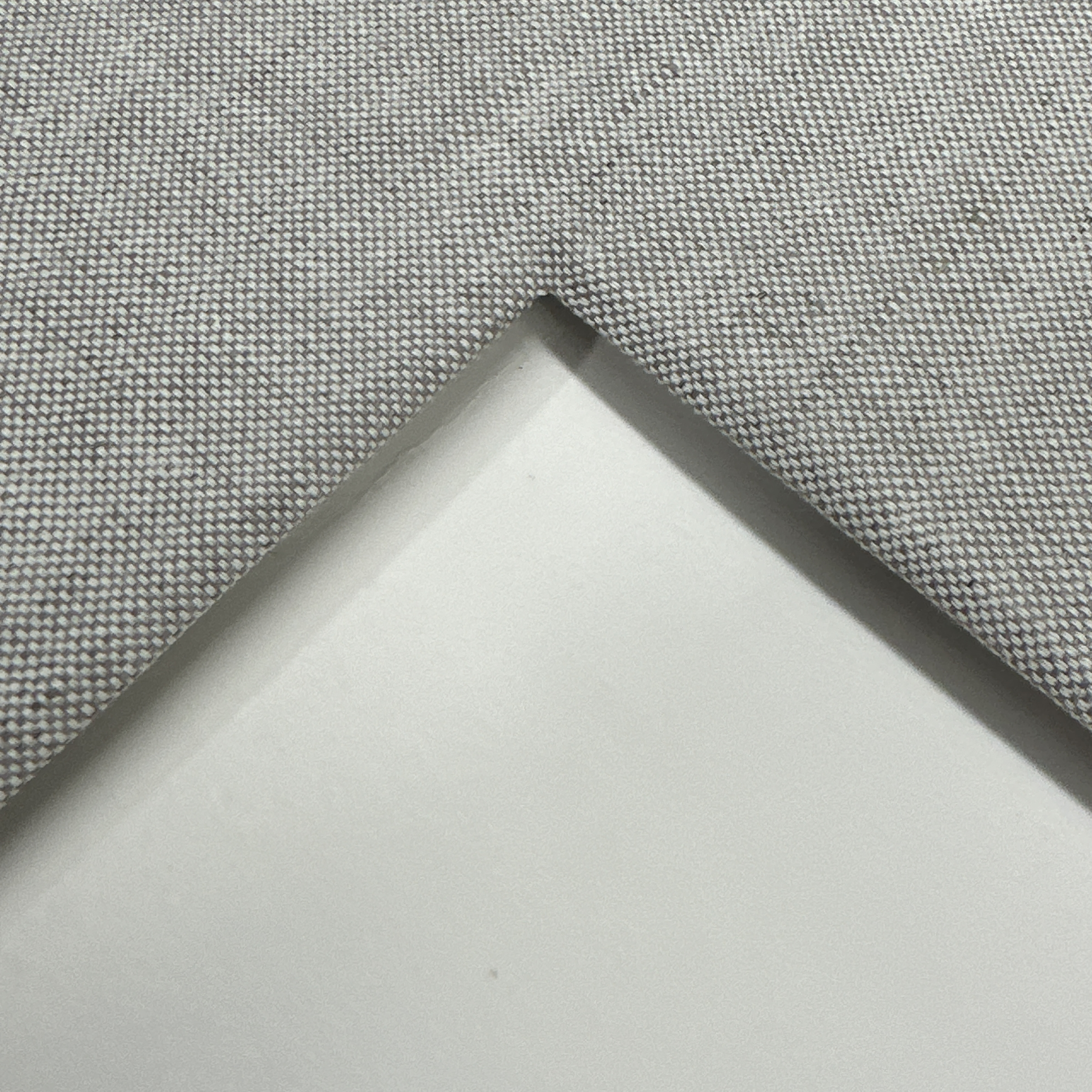
Formicola’s work is presented in a cloth-wrapped thick mat in a black-painted solid Ash frame behind 99% UV-blocking art glass. Spacers lift the glass away from the work, enhancing its three-dimensionality. Framed using conservation-grade materials.
| Attributes | Value |
|---|---|
| Attribution Class |
Unique |
Medium:
Silkscreen, Colored Pencil, Yarn, And White Feathers On White Paper
Date:
ca. 1970
Framed Size:
27 in. (h) x 23 in. (w) x 1 in. (d)
Attribution Class
Unique
Sheet Size:
26 in. (h) x 22 in. (w) x

Buy art, support creativity.

Guaranteed genuine artwork.

Free delivery on orders $99+.
Share
Established in 2017, Washington Color Gallery
presents exceptional works by Washington artists
and renowned printmakers worldwide.




Company

Washington Color Gallery
7979 Old Georgetown Road, Suite 1100
Bethesda, MD 20814, United States